PARK BOY|CHIMEZIE UMEOKA
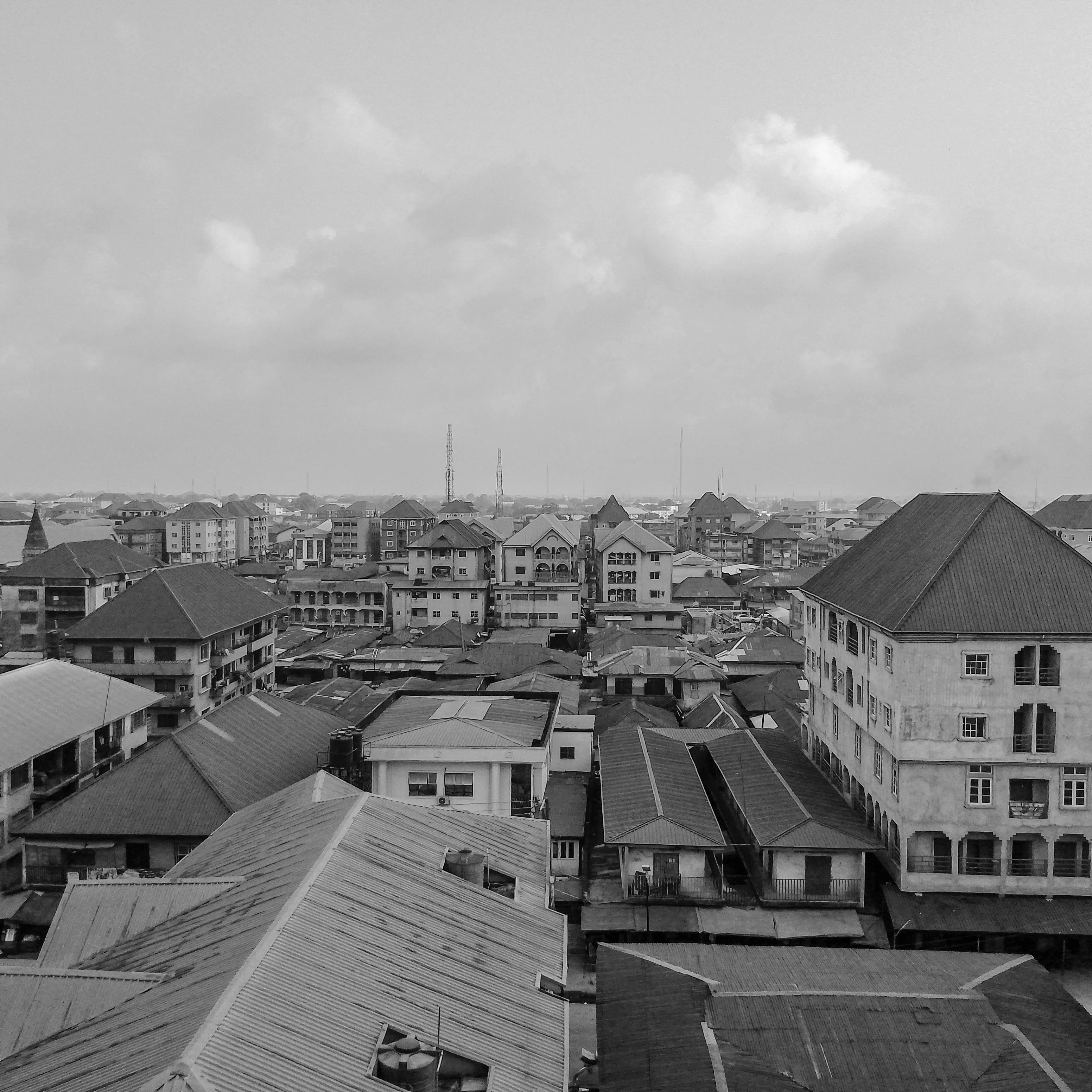
On Sundays, the park is naturally in lack of bustle. It is a day the agbero boys revered. Even the Hausa people that dominated the iron-corrugated houses around the mosque are invincible like they never existed. On a busy day like Tuesday, or on the Mondays when the Biafran divergents had not seized the day, the park will be a flood of black bodies and tricycles and trucks and policemen sharing one road with the certain purpose of existence. But their existence was chaos, a sublime hell to someone like me, who had lost that will to belong, that nature of insanity. In the busy days of the park, we—the sane people—do not exist. We try as much as possible not to exist because existence comes with a cost, and the agberos, the uncanny people of the park, are always steadfast in ensuring that.
So a traveler like me will always choose a day like Sunday to become a moving tapestry. As I saunter towards the bus park, I begin to feel a maudlin sensation in the form of nostalgic embers descending on me. Embers that were inspired by the fleeting elements of Mama’s flat. I had only stayed a week with Mama in her new flat. A flat with a ceiling so low I wondered if the builders were rationing the materials. It had the mushy smell of gone and forgotten things. The smell of the glummy carpet and the wallpapers hung in the still carapace of her room. When the wind howled from the netted window, the smell intensified, and I have always tried to attach that smell to something I can remember. But Mama’s flat has become sort of alien. It changed as much as she did.
Mama had become more confident, more settled, since Papa died. Her skin had taken a more radiant tone; a silky brown, and her once flakky, stretch-marked arms now hung in fatty blossom. She now dressed more elaborately, even to the simplest of places. The only thing she had refused to change was the Toshiba TV that sat on dusty glassware. And it was this TV, this piece of electronics that most reminded me of childhood: of the days of Rihanna and Jay-Z and Merlin. And it was this TV, more so than Mama, that hung like a weighty halo of nostalgia above me as I sat on one of the customer chairs waiting for the luxurious bus to get filled.
The conductor and some women were nagging at themselves, quarreling on how costly or how cheap their baggage would cost. Their chattery animations reminded me of a video I had once seen on TikTok; of a white man in a local market who relished on the animistic performances of the market women as they wooed him, with some magnanimity of importance, to patronize them. They had treated him like a miniature god, like someone they had not seen before, like the people of Kala treated Medza of Mongo Beti’s Mission to Kala—a novel I had read on transit while coming to Aba. Yet, I wonder if it was right to resent the archetypal loudness of these people, of my people. If it was right that I wished they could imbue the reticence of the people from western cities, like the clambering women of Venice who walked like shadows. Who walked past me on that cold Tuesday as I rushed to meet up for a photography masterclass as though I never existed.
As I sat on that chair, rummaging on the incidences of my scarred life, a voice jolted me. A sublime voice that snacthed the wind and whizzed past my ear.
“Nwanyioma, I get one chance to Owerri, you go?”
I turned around; a small, hungry-looking boy stood beside me, tugging a ticket into my hands. His eyes were brilliant, bloodshot, like an ethereal cherry, and they peered at me so pointedly I wondered if those were real eyes. The colour of his skin was a mushy brown, dried by the blowing Sahara winds. His clothes were raggy and wrinkled lines streaked across the surface. It immediately occured to me that the image I had conceived of him was Stopthief from Jerry Spinelli’s Milkweed, so I nudged my bag closer to my arms.
“No, my boy, I am going to Lagos. See my bus over there,” I said, pointing at the luxury bus with the bold inscription Ifeanyichukwu. The women were still nagging with the conductor. They were typical, as my mind hovered across it, of the Oremi women; women I can remember from Mama's marketplace as a child, how she often called out to them to buy crepe and velvet materials from her, along the clustered arrangement of stalls and shops.
The boy still lingered beside me, holding on to a dusty pole as he flaunted those bullet eyes of his.
“You too fine, Nwanyioma. Your hair is brown like two hundred naira.” He said.
I found myself laughing out loud. So loud I almost drew attention to myself. Was this, like the agbero boys always said, another format? “Kedu, what's your name?”
“Me, Chinedu, but they call me Obele.”
“Why do they call you Obele? Of course you are young.”
“They call me Obele when I am doing things that is bigger than me.”
“Like?”
He smiled, a radiant smile that revealed his yellow-tainted set of teeth. His canines were sharp-edged, like a bird's claw, and his bruised, pinkish lips perfected his facial features. My question wavered, like a blowing leaf, as he began to run his hands across the pole again, swiping down billows of dust. He appeared so shy, so shy I wondered why he was different, why he did not embody the radicalism of the open city like most of the mainstream park boys. He had tangibly piqued my interest, and as the tuggle of passengers appeared to casserole into more struggle, I sought to engage with him.
“What do you want to be when you grow up?” I asked, thinking it as the most practical thing to ask any young child, especially given that a child’s mind was full of brimming imaginative vistas, reeking of rainbow and fluorescent colors.
“I want to be millionaire. I also want to be in film.”
“Can you act?”
“I am smart, and I can be doing smart on TV.”
“Will you do smart if I can film you?”
“Yes nah,” He adjoined, beamingly.
I impulsively brought out my iPhone and began recording him. He poised in an elegant style, eagerly waiting and smiling shyly at the camera. For the first time I saw that his left hand was short-limbed, with a small lump on his elbow. But that did not alter his melodramatic performance as he began a rendition that had me rattling with laughter.
“If I am telling this aunty that I am loving her, I am not knowing what she will be thinking. She will be seeing me as a small boy. But I am knowing that I am not a small boy. I can be doing everything all the big men are doing and I can be loving her so well even though she is elder than me. I am seeing her eyes as a mirror and I am seeing my soul in it. She is doing things that is making me love her. She is not forcing it, I am just seeing it everywhere, even in the way she is laughing and her voice is doing like where small small birds are singing songs.”
I felt my eyes cloud with a bulb of tears, strained by both my vigorous laughter and a small tender emotion that had begun brewing in me. The boy gently held back to the pole, his head bent over. He began drawing on the earth; an act that amplified the vividness of his reticence. I knew there were so many talents around the park; of boys who built houses with thick papers, made cars with bolts and scraps. Of hawking girls who could sing like angels and old men who played flutes and drums, but this was novel and immersive. As I made to end the video, the bus hooted with readiness and I stood to leave. I gave him a two hundred naira note to which he said, “Now I am having a small of your hair.”
He kept waving at me as I walked towards the bus and crept into a seat beside the glossy window. As the bus, bustling with vibration, aced down from the bus stop, driving past the Aba Town Hall, I set my eyes upon the group of children clustered on the fences of the environment. They were looking arid and helpless, but there was a cadence of hope strewn on their faces. I knew because Aba children were never meant to break, even though the intricacies of this city was liable to smother them. And meeting this small boy was a vague reminder of this, of my own childhood, of the cruelty of survival.
I let my mind linger over the voice of a man who had risen in the bus commandeering us to pray for journey mercies. His suit was dusty and oversized, and the bag hanging from his shoulder almost grazed the floor. His bag, I thought. The recurrence of the thought manifested above my ignorance. I felt a winding sensation in my head; I felt a certain nakedness in my hands. His bag, I thought again. My own bag, I finally thought. I looked outside the window, the thin slice of opening let a woosh of air across my hair. My immediate past floated before me and in one simple film of remembrance, I realized that I had left my bag at that seat while waiting for the bus. I realized that it had been my bag till I met and laughed with the boy and then I could no longer visualize its existence. The preaching man’s voice rose with passion, he had broken into a Yoruba song and beads of perspiration streaked from his forehead as he pounced the red bible above him in prophetic gyration. I yelled at the driver to stop. The urgency of my yell made everyone scamper in fright. When the bus stopped, I clambered down the brief stairs and began running back through the breezing road; towards the park. My ear was filled with the sound of hooting engines and my legs felt like they were speeding out of their own volition.
—First published in Ikike Arts