
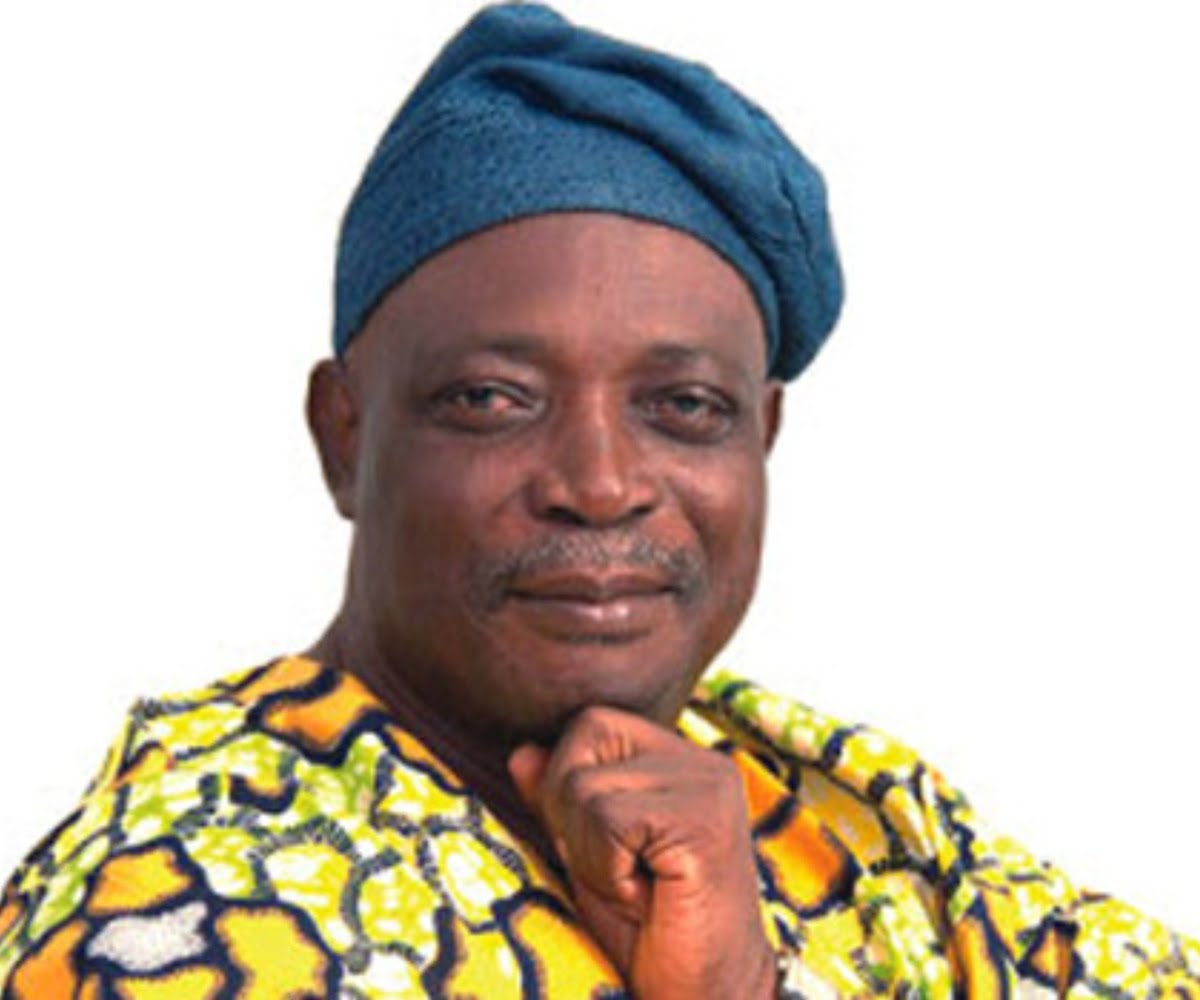


To tell of Rashidi Ladoja's regime as Governor of Oyo State is to recount a story of resilience, ambition, and most importantly, of greatness. His tenure, which span from the year 2003 to 2007, was a period marked by significant development and aspirations. Beyond the executive office, his enduring impact in Ibadanland is also deeply rooted in his role as a High Chief, a position that serves as evidence for his commitment to cultural heritage and community leadership. A close examination of his leadership tenure reveals a legacy shaped by dedication to progress and a steadfast adherence to Ibadan's revered traditional system.
During his governorship, Ladoja's administration laid considerable emphasis on important sectors, notably education and infrastructure. While his term was famously interrupted by an impeachment that was later overturned, his commitment to these areas did not wane. In education, his efforts were directed towards improving the learning environment and access for students across the state of Oyo. His political manifesto was focused on foundational improvements and policies aimed at enhancing educational standards. His administration's philanthropic arm, the Ladoja Foundation, has also been consistently involved in supporting education through scholarships and funding initiatives, reflecting a personal dedication that goes beyond his political jurisdiction. This bears testimony to his philanthropic spirit, whose impact still supports his beneficiaries.
One of the most enduring testaments to his vision in infrastructure is the Ibadan Circular Road project. While the full realization of this ambitious 110-kilometer road network has spanned successive administrations, it was Ladoja who, as governor, conceived the idea between 2003 and 2007. The present Oyo State Governor, Seyi Makinde, has notably acknowledged Ladoja as the visionary behind the project, even renaming a significant portion of it the ‘Senator Rashidi Ladoja Circular Road’ and developing a Government Residential Area (GRA) in his honor. This particular initiative, aimed at easing traffic congestion within the bustling Ibadan city and boosting industrialization, highlights a clear vision into the city's future infrastructural needs. It speaks to a practical kind of leadership that identified long-term solutions for urban development.
Beyond the realm of formal governance, Rashidi Ladoja's role as a High Chief, particularly as the Otun Olubadan, showcases an impactful cultural leadership within Ibadanland. The Ibadan chieftaincy system is one that is very unique. It is characterized by a hierarchical, merit-based progression that culminates in the Olubadan stool. Ladoja's journey through this system, from Mogaji to Otun Olubadan (and now, set to become the 44th Olubadan), is not ordinarily a personal ascent but a bonafide example of loyalty to tradition. He consistently upheld the value and sanctity of the traditional institution, significantly challenging attempts to alter the chieftaincy structure by a previous administration. His steadfast refusal in 2017 to accept a beaded crown under what he perceived as an illegal reform, before eventually accepting it in 2024 under a revised, mutually agreed declaration, cemented his reputation as a guardian and preserver of Ibadan's heritage.
According to local testimonies in Ibadan, people often speak of Ladoja's political legacy not just in terms of projects, but in his resilience and principled stand. Stories form the local community frequently tell of the inconsistent period of his impeachment and his subsequent legal battles, which he eventually had a victory over, as a testament to his tenacity and belief in the rule of law. This is unlike some politicians who might resort to violence or other political discrepancies. Ladoja pursued justice through legal means, a move widely respected by the populace till date. This approach often resonates deeply within a city that prides itself on its rare, egalitarian chieftaincy system, where influence is earned through patience, service, and consistency, not just through political strength or wealth. Many see his eventual return to prominence, both politically and traditionally, as proof of his integrity and an affirmation of Ibadan's distinct political culture, where legacy is built on consistency rather than control.
Conclusively, Rashidi Ladoja's contributions extend beyond the tangible. While his efforts in education and the foundational vision for critical infrastructure like the Circular Road are noteworthy, his most profound legacy in Ibadan lies in his unwavering commitment to the traditional system and his demonstration of resilience in the face of political adversity. His journey serves as evidence of a blend of modern governance and deep-seated cultural respect, solidifying his place as a significant figure in Oyo State's political and cultural narrative.
Sources:
Punch Newspaper.
https://punchng.com/olubadan-throne-ladojas-long-resilient-march-to-royalty/?hl=en-US
Vanguard Newspaper.
https://olubadan.com/otun-olubadan-of-ibadanland/?hl=en-US