
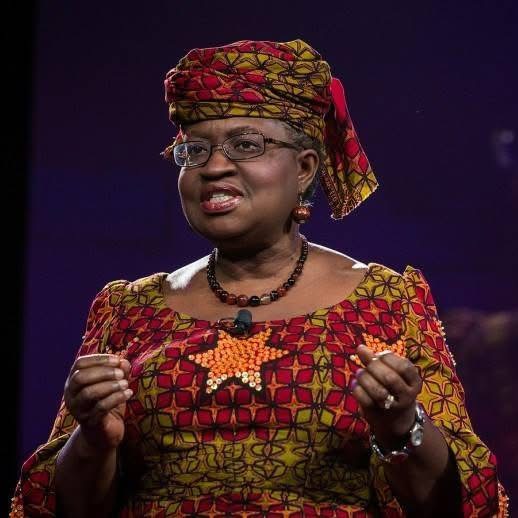


Who’s Ngozi Okonjo-Iweala?
Ngozi Okonjo-Iweala is posited as a towering figure not only in Nigeria but also in global economics. The reason she’s celebrated is for her trailblazing role as an African woman at the helm of national and international finance and development. She was born in Nigeria but was educated at Harvard University and earned a PhD in regional economics and development from MIT—credentials that only scratch the surface of her profound impact, considering the level she has gone to in life.
She made history as the first female and first African Director-General of the World Trade Organization (WTO), a position she assumed in 2021 with her shoulders high. Before that, she served twice as Nigeria’s Finance Minister in the two administrations of Olusegun Obasanjo in 2003-2006 and Goodluck Jonathan in 2011-2015, respectively. Also, she once served as Coordinating Minister for the Economy. In these roles, she spearheaded vital reforms, fighting corruption, restructuring debt, and stabilizing Nigeria’s economy. Her negotiation of a landmark $18 billion debt relief deal with the Paris Club of Creditors in 2005 remains one of her most celebrated achievements in Nigeria. History, which no one has ever come close to to date.
Okonjo-Iweala's influence extends far beyond national borders. At the World Bank, she spent over two decades, and she rose to the position of Managing Director—the second-highest role—overseeing a portfolio of critical development initiatives in Africa, South Asia, and Europe. Her leadership was marked by a focus on inclusive growth, gender equity, and sustainable development. As World Trade Organization Director-General, she brought to the table a rare blend of policymaking experience and global development insight. She has championed equitable access to COVID-19 vaccines, advocated for trade reforms that benefited developing economies, and pushed for solutions that tackle climate change through trade cooperation. All these were achieved single-handedly by her prowess in the sector she served.
A vocal advocate for good governance and transparency, she inspired generations of African women and young economists and earned numerous accolades, including listings among Forbes’ Most Powerful Women and Time’s 100 Most Influential People. In a world shaped by shifting economic powers and global challenges, Ngozi Okonjo-Iweala exemplified bold, visionary leadership. Her journey from rural Nigeria to the pinnacle of global trade governance reflects not only her brilliance and resilience but also her unwavering belief in economic justice and shared prosperity, which has always been on the lips of every soul who knows or reads her on paper or has heard through history.
However, Ngozi Okonjo-Iweala is considered a vocal advocate for gender equality. consistently using her platform and position to champion the empowerment of women and girls. She believes that inclusive economic growth is impossible without investing in women’s education, financial access, and leadership. During her time as the minister of finance in Nigeria, she pushed for policies that supported women entrepreneurs and expanded microcredit opportunities in rural areas, which made a lot of women stand on their feet, where the economic turbulence was too much to bear.
Again, her reforms brought visible change. In communities across southeastern Nigeria, for example, women-led cooperatives gained better access to loans, helping small businesses grow and expand into large businesses. Her transparency campaign, which included publishing federal allocations and empowering civil society groups, many led by women, to demand accountability from local leaders. In her hometown of Ogwashi-Uku, she is often praised not just for her global achievements but for building boreholes and supporting scholarships even today that directly impact lives. Her leadership style, which is firm yet empathetic, has made her a role model to countless Nigerian women seeking to break barriers even in today’s Nigerian politics. By and large, she achieved all these as a woman of valor, breaking the jinx of women not being contributive to society.
WRITTEN BY BENARD OKECHUKWU