
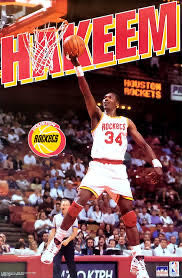


As a notable figure, Hakeem Olajuwon, widely known as “The Dream,” is celebrated as one of the greatest basketball players in NBA history. He was born and brought up in Lagos, Nigeria, where he began his journey from playing soccer in his youth to dominating American basketball courts. This gives a testament to his exceptional athleticism, discipline, and vision. Of course, a chick that will grow into a hen is spotted the first day it hatches. The same resonates with “The Dream” after playing college basketball at the University of Houston, where he led the Cougars to three Final Four appearances and quickly earned national attention for his agile footwork and defensive mastery.
In bringing him to the spotlight in 1984, Olajuwon was selected as the No. 1 overall pick in the NBA Draft by the Houston Rockets—one spot ahead of Michael Jordan. Over his 18-year NBA career, Olajuwon built a legendary legacy. He was a 12-time NBA All-Star, two-time NBA Champion (1994 and 1995), and the 1994 NBA Most Valuable Player (MVP). A no mean feat that’s rarely attained by his peers. His dominance was most evident during the mid-1990s when he led the Rockets to back-to-back championships, outplaying some of the league’s best, including Shaquille O’Neal and Patrick Ewing. Known for his graceful, unstoppable post moves, dubbed the "Dream Shake." Olajuwon combined finesse and power like no other center in NBA history, and it accords him great value and relevance.
Subsequently, he was a force, retiring as the NBA’s all-time leader in blocked shots. His ability to impact the game on both ends of the court earned him a place on multiple All-Defensive Teams and solidified his reputation as a complete player. Beyond statistics, Olajuwon’s legacy is rooted in how he inspired global fans, especially Africans, by showing that elite talent could come from anywhere. He remained deeply connected to his Nigerian roots and embraced Islam openly, blending humility with excellence. He was later inducted into the Naismith Memorial Basketball Hall of Fame in 2008, where he remains a symbol of international excellence, sportsmanship, and perseverance. His career set the gold standard for centers and global athletes alike till, as I type this article.
The story of this legend is incomplete without highlighting his impact, going far beyond basketball courts into philanthropic efforts in Nigeria. He inspired generations and strengthened communities. Deeply proud of his Lagos roots, he has invested in youth development, education, and sports infrastructure, where he donated sports equipment to different schools and communities. He has supported basketball clinics and training camps across Nigeria, offering aspiring athletes both mentorship and exposure to international standards of the game. In Lagos, for instance, stories of Olajuwon’s influence are told with reverence. Local coaches recount how his visits to youth basketball camps energized entire neighborhoods. For many young athletes, just meeting “The Dream” is a life-changing moment. A proof that someone from their streets can reach the highest levels of global sports.
One popular story tells of a teenager in Surulere who, after attending one of Olajuwon’s training sessions, went on to earn a basketball scholarship abroad, which was a life-turning point for good. Still on this philanthropy, he has also contributed to building mosques and community centers, blending faith with service. His generosity is often quiet but deeply felt, focused on empowering future leaders, not just athletes. For many in Lagos, he represents excellence rooted in humility, proving that true greatness includes giving back. His legacy continues to shape Nigeria’s sporting future and inspire countless dreams across the country, including generations coming to know about him in the sports terrain. By and large, there’s no specific word to describe him but a pacesetter whose cloaks of sports are scattered across the country beyond ethnic enclaves.
WRITTEN BY BENARD OKECHUKWU