
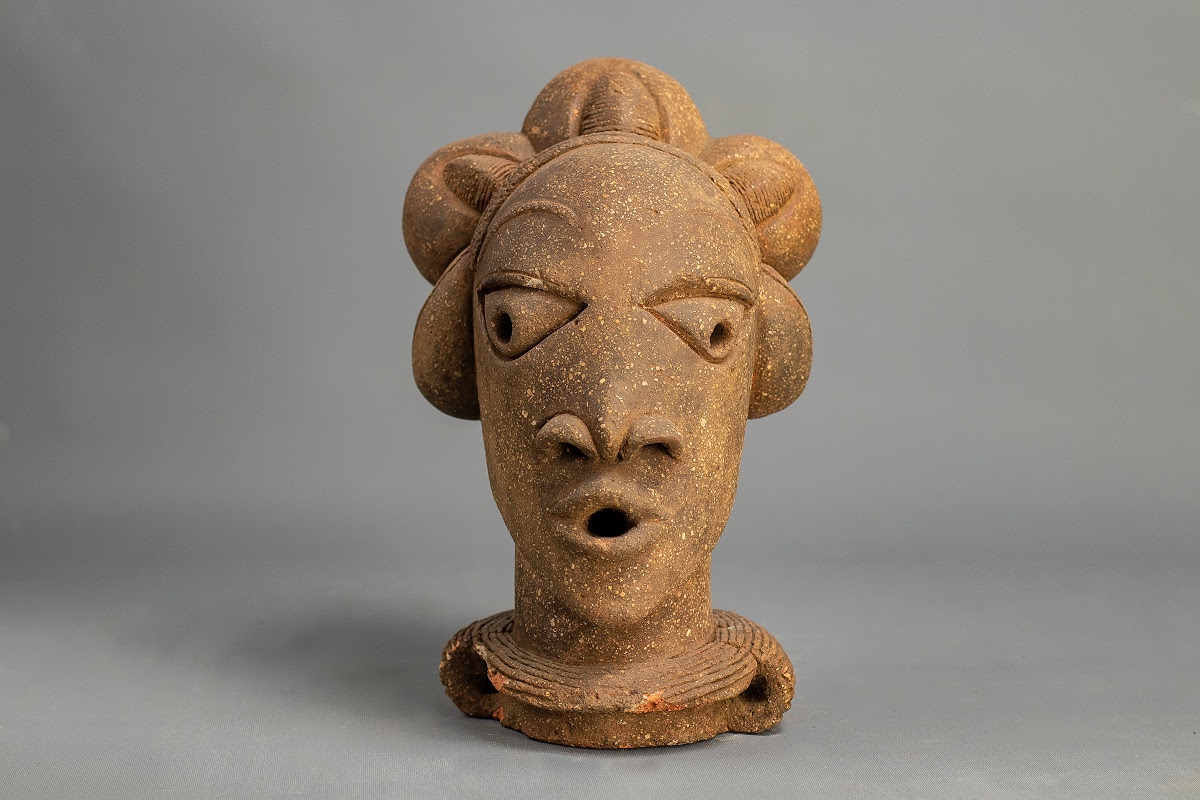


In the progression of Africa’s evolution, Nigeria’s glory shines the brightest, aiding the platform for the recent crop of innovators across different sectors. Thousands of startups, initiatives, programs and creative projects are teeming across the shared areas of our human endeavor; including education, finance, technology, agriculture and especially, in the art scene. The Art sector is a comparatively underrated facet among these other sectors, yet throughout history, we have seen several artists dominate the frontiers of their craft.
From the pioneering influence of musicians like Fela Kuti, writers like Chinua Achebe, and artists like Ben Enwonu, contemporary artists have gone on to raise the bar many notches higher. Around the world, Afrobeats has become a sensation, Nigerian writers are telling great stories, and visual artists are reimagining the beauty of our country. Yet, in this epoch, the great importance of Nigeria’s contemporary sculptural artists remains unsung, even though their works are helping transport the original gaze of our indigenous identity with modern finesse. Borrowing from the lasting influence of the pioneer sculptural artists, these sculptors have made strides in sculpting the face of the future, which this essay ventures to explore.
The history of contemporary sculptors can be traced back to the 20th century, with pioneers like Aina Onabolu (1882-1963), Bruce Onobrakpeya, and Ben Enwonu (1901-1994). These sculptors
laid the foundation of sculptural art that bridges the gap between traditional aesthetics and modern techniques. Other groups emerged as time went on in the Nigerian cities of Ibadan, Nsukka, Enugu, and Kano. A significant era occurred at the University of Nigeria, Nsukka, where the widely celebrated Ghanaian-born artist El Anatsui, the enigmatic Uche Okeke, Obiora Udechukwu, and other members of ‘The Nsukka Group’ inspired a generation of sculptors who have been of immense relevance in the Nigerian art scene. These artists blend indigenous styles, including native symbols like Adinkra, Uli, and Nsibidi designs, with contemporary methods. For them, sculptural art became a means to transport their cultural identity, reflecting on their heritage and post-colonial experience.
This is equally not far and wide from the contemporary sculptors based in the more cosmopolitan areas, significantly Lagos, whose sculptors radiate the variety and diversity of the Nigerian spirit. Artists like Olubunmi Atere and Nnenna Okore are at the forefront of this movement, creating works that are inspired by the environment and connection to traditional practices, all while expressing modern styles.
Olubunmi Atere is a self-taught artist based in Lagos. A former communications consultant, she reconnected with her passion for art in 2021. Her work, as described in an interview with Creatives Around Us, is a combination of tactile, earthy textures with vibrant, unconventional materials. Using malleable objects like clay and fabric, she integrates traditional and contemporary elements. Artists like her are not just using these local materials to indigenize their art; they are actively in dialogue with them, like a writer working with words, to language their identity, life, and history. Her works, like The Rhythm of Life (2021), Pillar (2022), and Wave (2022), touch on the cores of her thematic preoccupations, yet their structural design evokes the skill of an artist that is conscious of their tradition and adept in representing them through modern creativity.
Another important sculptor whose work is of paramount significance in the Nigerian and Diasporic art scene is Nnnena Okore. Born in Australia and raised in Nigeria, Okore lives and works in Chicago at North Park University. Her art is inspired by her origins and the rich forms, symmetry, and colors of the Nigerian environment. Like the art of the pioneers, her work brings back to life the things often considered as mundane. She uses floatsam or discarded objects to create complex and layered structures and installations. Mostly self-taught, she found a way to transform the dissonant characteristics of her upbringing in Nsukka to sculptures finished with modern aesthetics. Having been taught by some members of the Nsukka group at the University of Nigeria where she majored in Fine and Applied arts, she utilizes the same traditional craftsmanship and experimental style that creates a stunning visual narrative. This has brought her numerous accomplishments from different international organizations, also elevating the standard of Nigeria’s sculptural art to an enviable standard.
Conclusively, it is an incomprehensible task to try annotating the artists heralding the new wave of sculptural innovation in Nigeria. Across the country, in the diaspora, and everywhere around the world, artists are redefining sculptural art. Most of them, like the indigenous women who are into pottery, molding, and ceramic designs, remain uncelebrated. But the importance of their work still declares itself, serving various purposes without which Nigeria will not be as great as it is and as promising as it appears. It is their light that gleams from the dark corners of the country, giving hope.
References
- Creatives Around Us. (2022, November 11). Creatives Around Us Interview: Olubunmi Atere. Creatives Around Us. https://creativesaroundus.com/2023/09/24/olubunmi-atere-ceramic-artist/
- Wikipedia. (2025, September 21). Nnenna Okore. Wikipedia, The Free Encyclopedia https://en.wikipedia.org/wiki/Nnenna_Okore
- Okeke, U. (1982). Art in Development: A Nigerian Perspective. Nok Publishers.
- Onobrakpeya, B. (2009). Ben Onobrakpeya: The Spirit of the Journey. Ovuomaroro Studio.