
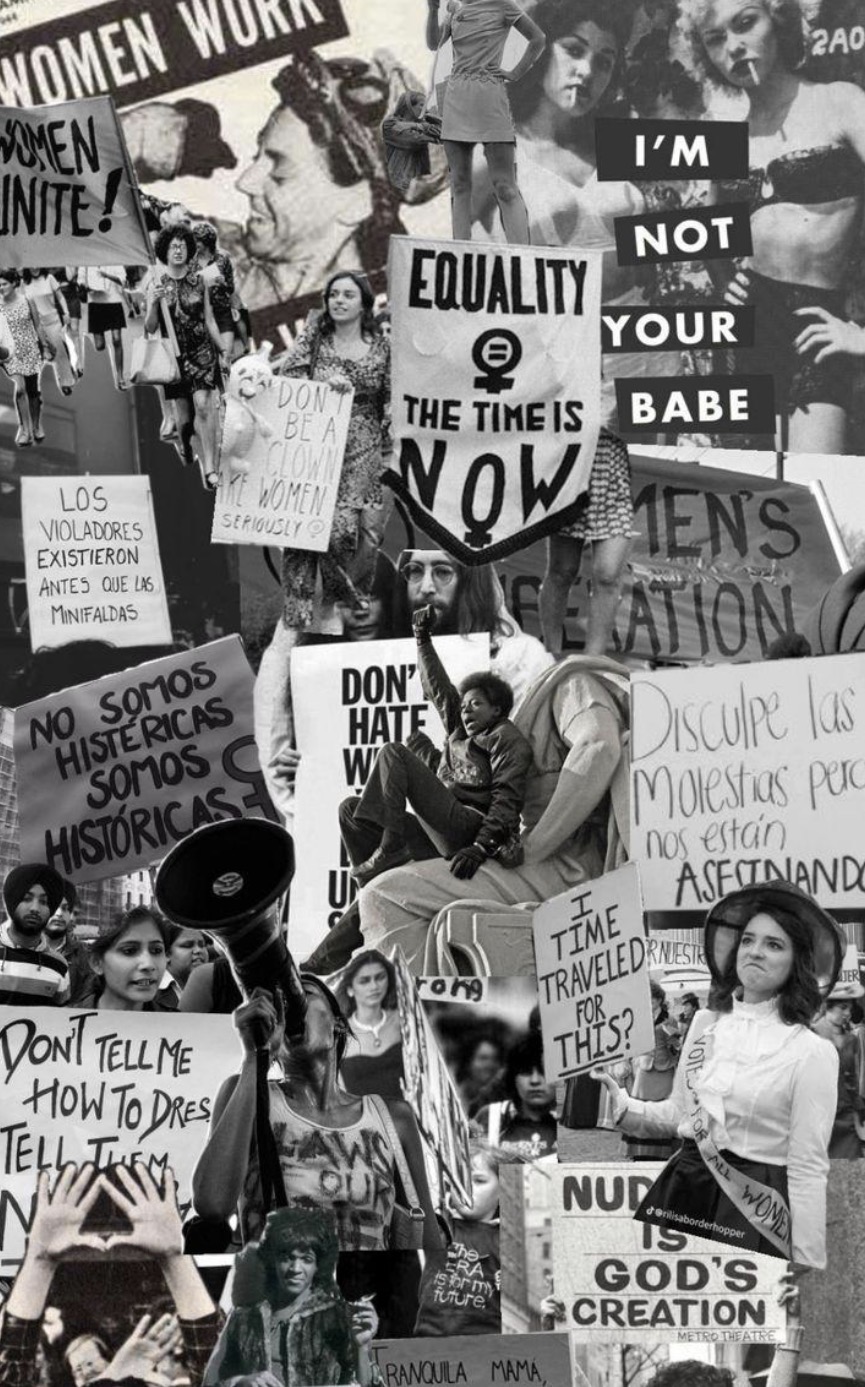
“Social Media Feminism vs. Real-Life Feminism: Are We Just Performing Activism?” by Rachael Ajisafe
She hesitates before stepping out.
It is not late, not even dark yet, but she still checks her outfit twice. Not because she wants to impress anyone, but because she has learned that sometimes, being seen is enough to be judged, harassed, or blamed.
A few hours later, her phone lights up.
“Women deserve to feel safe everywhere.”
Thousands of likes. Dozens of reposts. Strong words. Strong support.
Yet nothing about her walk home changes.
This quiet contradiction sits at the center of modern feminism. A movement once defined by physical resistance and collective struggle now exists in a world where advocacy can be as simple as a tap on a screen. The question, then, is not whether feminism is still relevant, but whether its methods have shifted in ways that prioritize visibility over impact.
Feminism began as a demand for recognition and rights. Early movements focused on fundamental issues such as voting, education, and legal identity. Women organized, protested, and challenged systems that excluded them. Over time, the movement expanded, addressing workplace discrimination, reproductive autonomy, and the layered experiences of women across race, class, and culture. Each stage reflected a response to real conditions, grounded in lived experiences rather than digital expression.
In the present day, social media has become one of the most influential spaces for feminist discourse. It allows individuals to share experiences, call out injustice, and mobilize support within seconds. What once required physical gatherings can now happen across continents in real time. For many, this has made feminism more accessible and inclusive, opening the door for wider participation.
However, this accessibility introduces a new complexity. Social media activism often operates on visibility, speed, and engagement. Posts are crafted to be seen, shared, and reacted to. While this can amplify important issues, it can also create an environment where activism becomes performative, shaped by trends rather than sustained commitment. When a cause is reduced to a moment of online attention, its depth risks being overshadowed by its presentation.
Real-life feminism, on the other hand, tends to unfold away from timelines and hashtags. It exists in courtrooms, classrooms, communities, and everyday interactions. It is reflected in policy changes, support networks, and continuous efforts to challenge inequality. Unlike social media activism, its progress is often slow and less visible, but it is grounded in direct engagement with real-world structures.
Still, separating the two forms of feminism entirely may overlook how interconnected they have become. Online platforms can spark conversations that lead to real action. Awareness raised digitally can influence public opinion and place pressure on institutions. In this sense, social media does not replace real-life activism but can act as a catalyst for it.
At the same time, the gap between expression and action remains significant. Supporting a cause online does not always translate into meaningful change offline. The ease of participation can sometimes blur the line between genuine advocacy and symbolic alignment.
This raises an important consideration. Is feminism today being strengthened by its digital presence, or diluted by it? The answer may not lie in choosing one over the other, but in examining how both can work together effectively. Because while the post on the screen speaks loudly, the reality outside it speaks louder.